

The perfect muzzle – materials, fit and what you need to consider
Share
Not all muzzles are created equal – the material question
Have you decided to accustom your dog to a muzzle? Excellent! Now comes the most important question: Which muzzle is the right one?
As muzzle experts, we have tested all common materials and would like to give you our honest assessment.
Muzzle materials compared
❌ Nylon muzzle loops: Absolute no-gos
Why they are so common: Cheap and available everywhere.
Why you should never use them:
- Completely prevent panting
- No air circulation possible
- Border on animal cruelty
- In summer, life-threatening
Our clear recommendation: Stay away from muzzle loops! This is only an option in an emergency at the vet's.
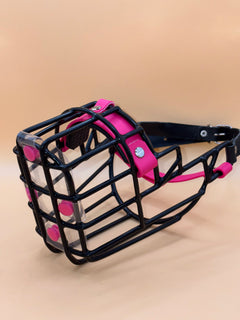
🟡 Plastic muzzles: For mild cases
Advantages:
- Light and inexpensive
- Easily available
Disadvantages:
- Break easily under stress
- Not suitable for dogs with destructive intentions
- Mostly little to no panting possible
Conclusion: Only recommended for uncomplicated dogs and short training phases.
🟡 Leather muzzles: Traditional, but problematic
Disadvantages:
- Strong odor
- Gets dirty and stiff quickly
- Offers no protection against bites
- Difficult to clean
- Not waterproof
Conclusion: Not our first choice for hygienic and safety reasons.
🟠 Biothane muzzles: The flexible alternative
Advantages:
- Easy to clean
- Customization also possible
- Alternative as food protection if a wire muzzle is not desired
Disadvantages:
- Very flexible – not bite-proof
- Poor air circulation
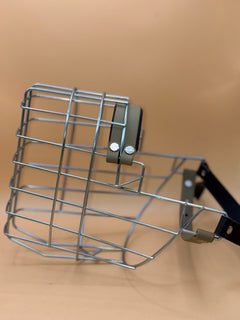
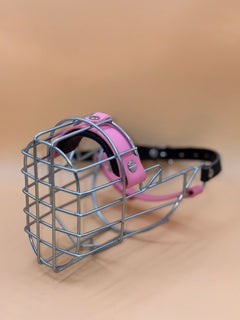
✅ Metal muzzles: The clear test winner
Why we rely on metal:
- Hygienically safe
- Bite-proof
- Stable and durable
- Does not slip
- Easy to clean
Disadvantages:
- Appearance can be off-putting
- Carries some risk of injury
Conclusion: Metal has clearly prevailed for us. That's why we primarily offer wire muzzles here – from standard to custom-made.
The three crucial measurements
To find the perfect muzzle, you need three measurements:
- Circumference of the snout (widest point)
- Length of the snout (from nose tip to eyes)
- Head circumference (in front of the ears)
Tip: In our separate article, you will find detailed measuring instructions with pictures.
Why "too big" is often just right
A common phrase we hear: "The muzzle looks much too big!"
The truth: What appears oversized at first glance is usually perfectly adapted to the dog's needs.
The temperature test
At 15 degrees ambient temperature, the muzzle may seem generous. At 25 degrees, your dog needs the full depth when panting.
Remember: Dogs don't sweat like humans. They cool themselves down almost exclusively by panting. A muzzle that is too small can lead to a medical emergency in summer.
When does a muzzle fit perfectly?
An optimally fitting muzzle allows your dog to:
- ✅ Open their mouth wide
- ✅ Pant without problems
- ✅ Drink (ideally from a bowl)
- ✅ Have a clear field of vision
- ✅ Wear comfortably for hours
Are you unsure about your choice?
Especially for dogs with unusual proportions, finding the perfect muzzle can take time. This is where we come in!
Our free consultation helps you:
- Find the right type of muzzle
- Take the measurements correctly
- Choose the appropriate material
- Plan a custom-made muzzle if necessary
In the next article, we will show you step-by-step how to gently and positively accustom your dog to the muzzle – so that they hardly notice it after a short time.